Homemade Strawberry Fruit Leather
Highlighted under: Cheesy Goodness
I love making my own strawberry fruit leather because it’s a fun and creative way to preserve the natural sweetness of fresh strawberries. The process allows me to control the ingredients, ensuring there are no artificial flavors or excessive sugars. Plus, it’s a fantastic snack that’s perfect for kids and adults alike. I enjoy experimenting with different fruits and flavor combinations, turning simple ingredients into a chewy treat that’s great for on-the-go snacking or a healthy dessert option.
When I first tried making fruit leather at home, I was amazed at how easy and delicious it turned out. The key is to use ripe strawberries for maximum flavor. I learned that blending the strawberries with a little lemon juice not only enhances the taste but also helps preserve that beautiful red color.
As I experimented further, I discovered that spreading the puree in a thin, even layer on the dehydrator tray makes a huge difference in the final texture. Achieving that perfect chewiness is all about finding the right balance between thickness and drying time!
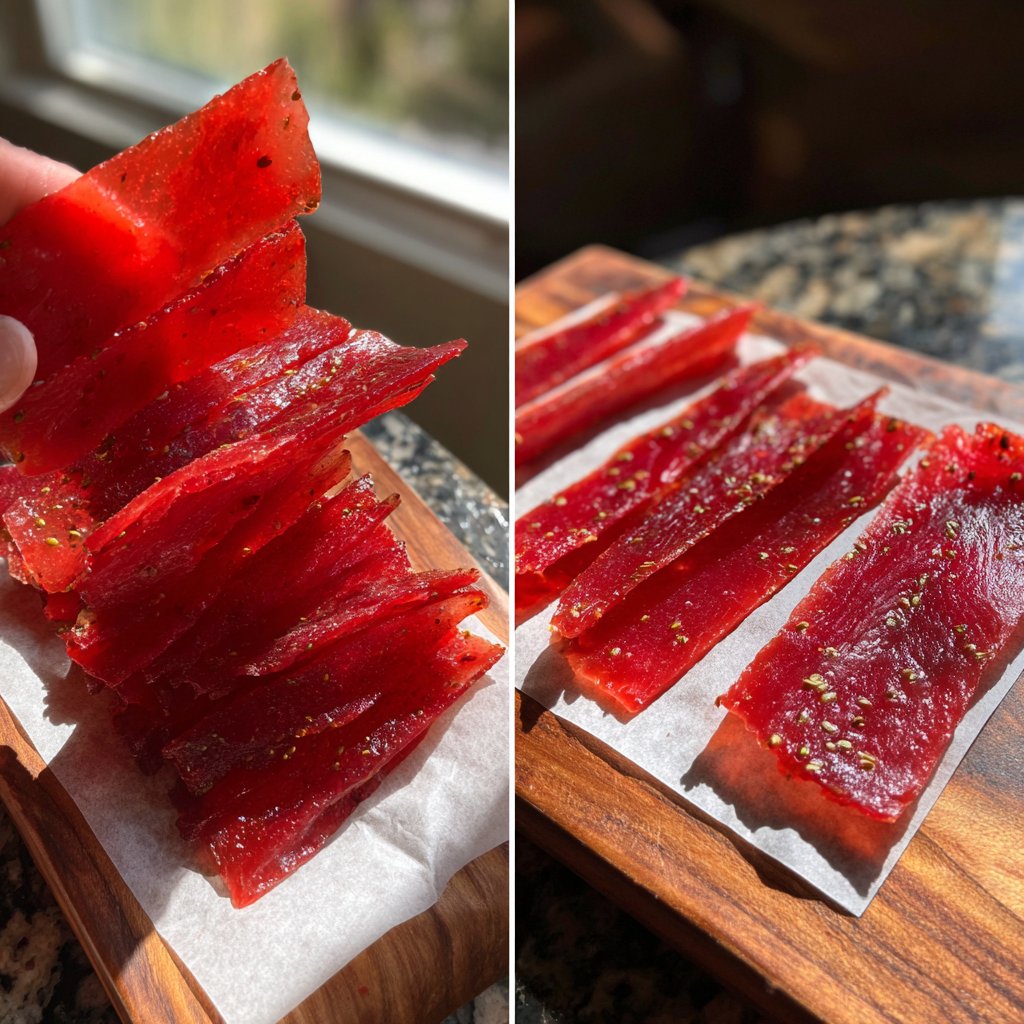
Why You'll Love This Recipe
- Natural sweetness of fresh strawberries shines through
- Perfectly chewy texture that's satisfying to snack on
- Great for both kids and adults; a fun way to enjoy fruit!
Understanding Ingredients
The star of this recipe is, of course, the strawberries. Choosing ripe, sweet strawberries is essential for achieving a flavorful fruit leather. Inspect the berries for freshness, ensuring they are bright red and free from blemishes. If you're looking for a different flavor profile, other fruits like raspberries or peaches can be blended in with the strawberries. Just remember that the sweetness levels will vary, so adjust the honey accordingly to your taste.
Lemon juice plays a crucial role in balancing the flavors in your fruit leather. It adds a subtle tartness that complements the natural sweetness of the strawberries, enhancing the overall taste. It's also a natural preservative that helps maintain the vibrant color of the fruit leather during the drying process. If you prefer a sweeter leather, the tablespoon of honey can be modified, or you can experiment with other natural sweeteners like agave syrup or maple syrup.
Dehydration Techniques
Whether you’re using a dehydrator or an oven, controlling the drying temperature is key to achieving the perfect texture. A dehydrator set at 135°F (57°C) generally produces more consistent results, while an oven needs careful attention to prevent overheating. Keeping the oven door slightly open allows moisture to escape, and checking the leather regularly will help you know when it's done—look for a matte finish that’s no longer sticky to the touch.
If you find your fruit leather drying unevenly, consider swirling the tray or repositioning it within the dehydrator or oven. Heat can vary in these appliances, leading to some spots drying faster than others. To prevent this, I recommend rotating any trays or sheets halfway through the drying time. Also, feel free to test a small corner of the leather; it should peel away cleanly without leaving residue.
Ingredients
For the Strawberry Fruit Leather
- 2 cups fresh strawberries, hulled
- 1 tablespoon lemon juice
- 1 tablespoon honey (optional)
Instructions
Steps to Make Strawberry Fruit Leather
Prepare the Strawberries
Wash and hull the strawberries, placing them in a blender with the lemon juice and honey if desired. Blend until smooth.
Spread the Mixture
Pour the strawberry puree onto a dehydrator tray or a lined baking sheet. Spread it out evenly to about 1/8 inch thick.
Dehydrate the Mixture
If using a dehydrator, set it to 135°F (57°C) and dry for 4-6 hours until the fruit leather is no longer sticky. If using an oven, set it to the lowest temperature and leave the door slightly ajar.
Cool and Cut
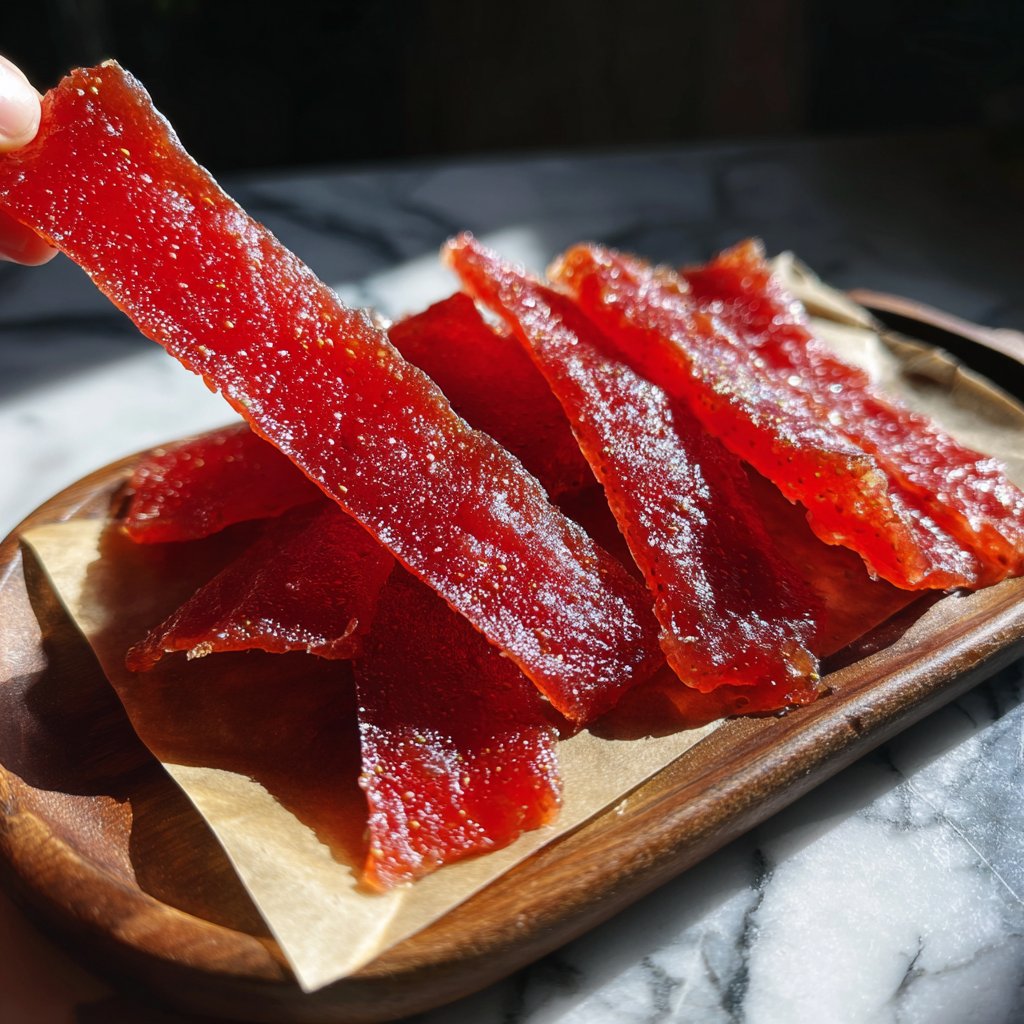
Once dried, remove the fruit leather and let it cool completely before cutting it into strips. Roll them up and store them in an airtight container.
Enjoy Your Snack!
Pro Tips
- Always use ripe fruit for the best flavor. You can experiment with adding spices like cinnamon or ginger for a twist. For easier cutting, lightly dust the fruit leather with cornstarch before rolling.
Storage Tips
After cutting the cooled fruit leather into strips, it’s important to store them correctly to maintain freshness. Place the strips in an airtight container, layering parchment paper between them if you're stacking. This will prevent them from sticking together. For extended shelf life, consider refrigerating or freezing the fruit leather, where it can last for several months. Just ensure it is completely cool before sealing to avoid condensation, which can lead to spoilage.
For on-the-go snacking, you can roll the fruit leather strips in wax paper or plastic wrap for individual portions. This not only makes it convenient for lunch boxes or hikes but also helps retain moisture and freshness. I love having a stash of these handy for an afternoon snack, knowing they're both healthier and tasty!
Flavor Variations
While the classic strawberry flavor is delightful on its own, don’t shy away from experimenting with combinations. Adding a small amount of pureed banana or apple will lend a different sweetness and enhance the chewiness of the fruit leather. Another great variation is infusing the mixture with spices—cinnamon or vanilla extract can introduce warmth and complexity, elevating your fruit leather game.
You can also explore using different types of fruit altogether. For instance, if strawberries are out of season, consider using a mix of mango and pineapple for a tropical twist. Just keep in mind that fruits with higher water content may need longer dehydration times. Always taste your mixture before drying and adjust flavors as necessary to ensure you enjoy the final product.
Questions About Recipes
→ Can I use frozen strawberries?
Yes, you can use frozen strawberries! Just thaw them first and drain excess moisture before blending.
→ How do I store the fruit leather?
Store the rolled fruit leather in an airtight container at room temperature for up to two weeks.
→ Is it possible to add other fruits?
Absolutely! You can combine strawberries with other fruits like bananas or mangoes for unique flavors.
→ What can I do if my fruit leather is too sticky?
If it's too sticky, it might need more drying time. Place it back in the dehydrator until it reaches the right texture.
Homemade Strawberry Fruit Leather
Created by: The Dishroots Team
Recipe Type: Cheesy Goodness
Skill Level: Beginner
Final Quantity: 4 servings
What You'll Need
For the Strawberry Fruit Leather
- 2 cups fresh strawberries, hulled
- 1 tablespoon lemon juice
- 1 tablespoon honey (optional)
How-To Steps
Wash and hull the strawberries, placing them in a blender with the lemon juice and honey if desired. Blend until smooth.
Pour the strawberry puree onto a dehydrator tray or a lined baking sheet. Spread it out evenly to about 1/8 inch thick.
If using a dehydrator, set it to 135°F (57°C) and dry for 4-6 hours until the fruit leather is no longer sticky. If using an oven, set it to the lowest temperature and leave the door slightly ajar.
Once dried, remove the fruit leather and let it cool completely before cutting it into strips. Roll them up and store them in an airtight container.
Extra Tips
- Always use ripe fruit for the best flavor. You can experiment with adding spices like cinnamon or ginger for a twist. For easier cutting, lightly dust the fruit leather with cornstarch before rolling.
Nutritional Breakdown (Per Serving)
- Calories: 70 kcal
- Total Fat: 0g
- Saturated Fat: 0g
- Cholesterol: 0mg
- Sodium: 0mg
- Total Carbohydrates: 18g
- Dietary Fiber: 1g
- Sugars: 14g
- Protein: 0g